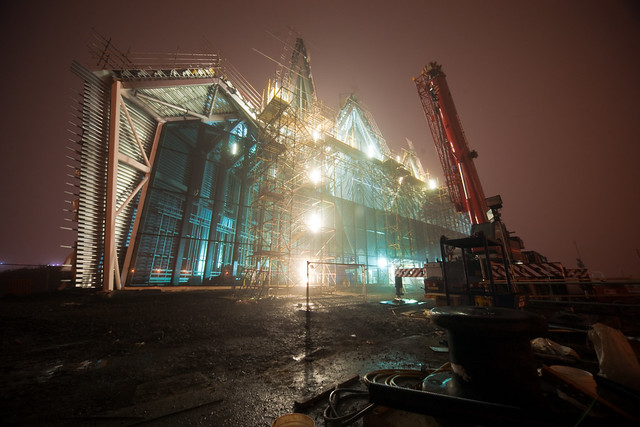
Glasgow is getting a new, posh transport museum – the current one is very cramped and can only show a small proportion of the exhibits. The new Riverside museum is being built right where the River Kelvin joins the Clyde, and it’s a very striking design by Zaha Hadid. The new museum isn’t going to open until Spring 2011, but I went along for a sneak preview…
Miscellaneous
Central Hotel
Glasgow’s Central Hotel has a long and distinguished history – originally built in 1882 by Caledonian Railways alongside their Central Station, it had 420 beds for guests plus 170 beds for their servants – these were the days when the upper classes travelled in style! When the station was extended in 1906, the hotel was also extended.
Continue reading
Benhar Quarry Explosives Factory
Another explosives site, now used for paintballing:
The Big Idea
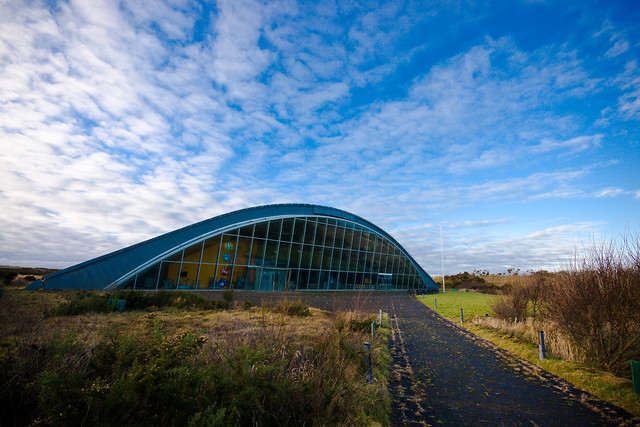
Tucked down at the end of the Ardeer peninsula, the Big Idea Centre was an interactive museum – a Milennium Project, it had capital funding for construction but no ongoing support and was expected to make all it’s funding from visitors. That never happened – 120,000 visitors in the first year, 50,000 in the second were never going to keep the place running, and the much larger Glasgow Science Centre killed it off – it’s been closed since 2003.
Co-Operative Society Building
Built in 1876, the amusingly-named Gusset Building was built as a warehouse for the Scottish Co-operative Wholesale Society, the first purpose-built warehouse of its type in Scotland. The SCWS quickly outgrew the space, though, so it was converted to offices for various Co-operative Society operations, including the in-house magazine and later the ground floor was used for funerals. The building is now empty, and is up for sale with plans to convert to 75 flats, but current economic climate, blah blah blah…
Lansdowne Parish Church
Lansdowne Parish Church on Glasgow’s Great Western Road is a landmark – it’s beautifully thin spire is visible from all over the west of the city. Built in 1863, unfortunately the church has had to close it’s doors due to dry rot and decay, though there’s a strong local campaign to save it – as part of this, a bunch of Glasgow photographers were invited along to take pictures in the normally-closed building.
Lesmahagow High School
This was an unplanned visit on the way back from somewhere else – I can’t find much history on the place, but it’s basically a lovely Victorian school with a couple of big ’60s extensions. The whole lot is now empty as a brand new school has been built next door.
The old and new buildings:
The Molendinar Burn Part II
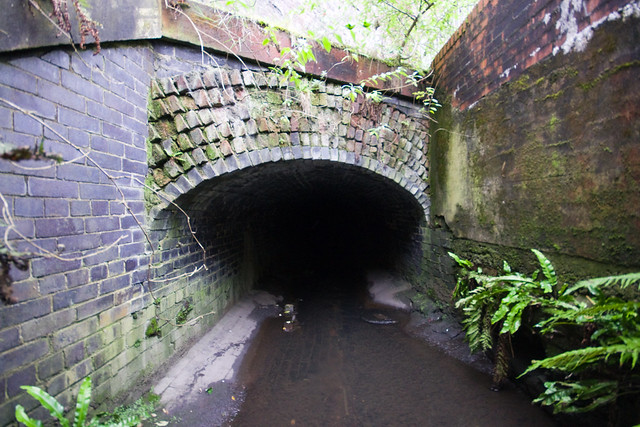
After my previous explore of Glasgow’s Molendinar Burn, I had to go back to cover the downstream section, which runs from Duke Street down to the Clyde.
The downstream tunnel entrance:
The Molendinar Burn
The City of Glasgow’s name comes from the Gaelic Glasgu, meaning dear green place – the dear green place in question was a beautiful wooded valley beside the Molendinar Burn where St. Mungo (also known as Kentigern) founded a church in the 6th Century.
The Molendinar Burn kept it’s importance in Glasgow’s history for a long time – the later cathedral was built approximately on the site of St. Mungo’s church, and a bridge (the Bridge of Sighs) was built over the burn to the Necropolis. The burn also marked the eastern border of the city, and later was used to power the first of the mills that sprung up in the city.
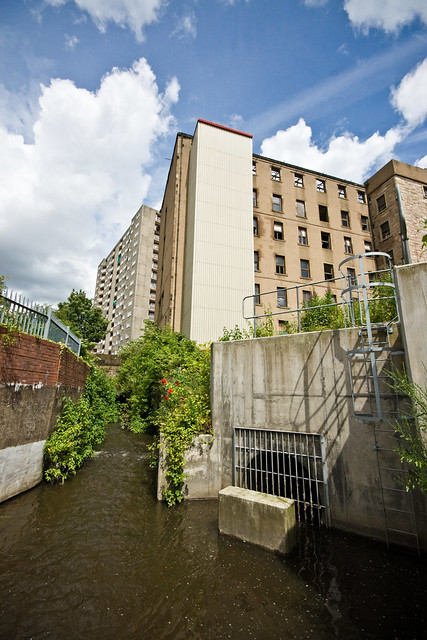
The city outgrew the burn, though, and in the 1870s it was culverted over and almost forgotten – Wishart Street now runs along it’s path next to the cathedral. It’s exposed at one small section next to the old Great Eastern Hotel, so I went for a look.
The exposed section: